Moodplan
AI agent with Personalities that makes planning just right for you.
AI agent with Personalities that makes planning just right for you.
AI agent with Personalities that makes planning just right for you.
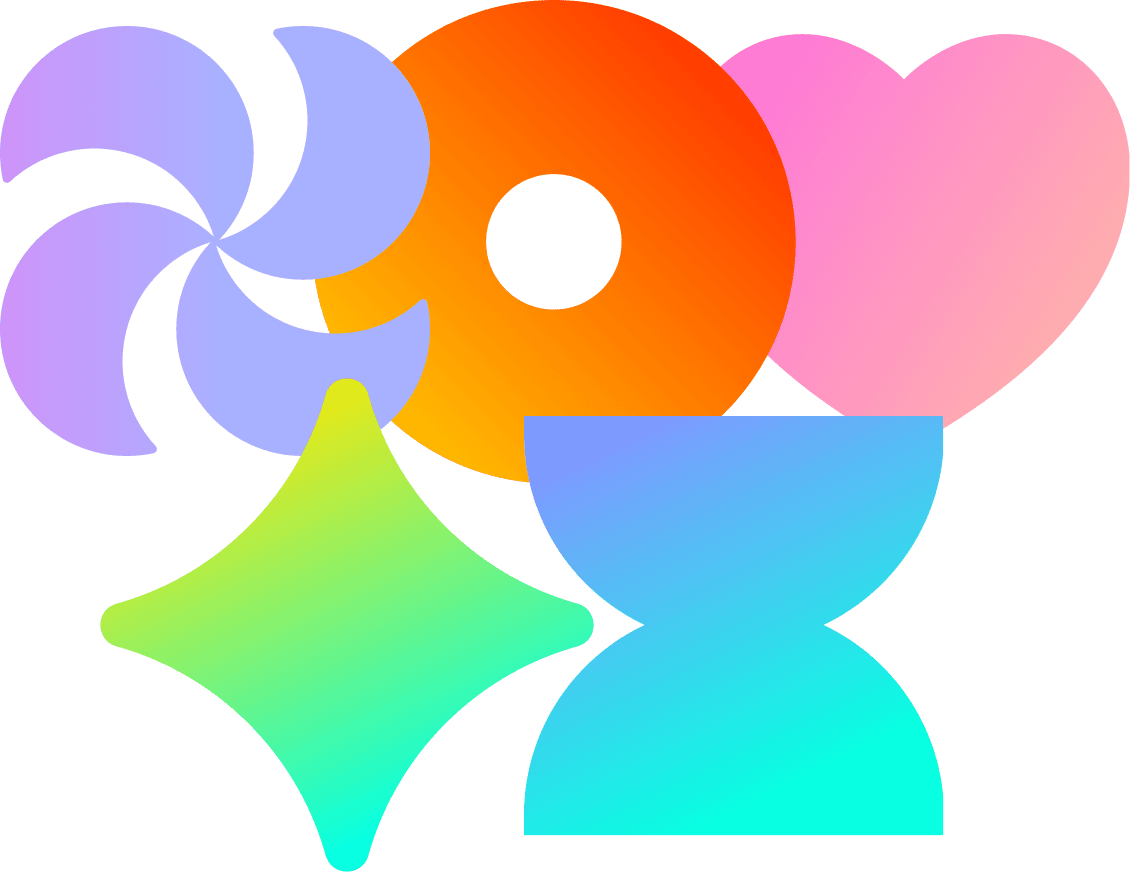
When
2025 Fall Quarter
Sep - Dec
Role
Interaction Design
Visual Design
Prototype
Video Creation
Advisor
Ph.D. student Kevin Feng,
Prof. David McDonald,
@ University of Washington
Highlights
Challenged current AI norms by Introducing personalities into the planning stage.
Accelerated the design workflow by prototyping directly with Gemini.
Leveraged Speculative Design to reimagine the future of human-agent collaboration.
Challenged current AI norms by Introducing personalities into the planning stage.
Accelerated the design workflow by prototyping directly with Gemini.
Leveraged Speculative Design to reimagine the future of human-agent collaboration.
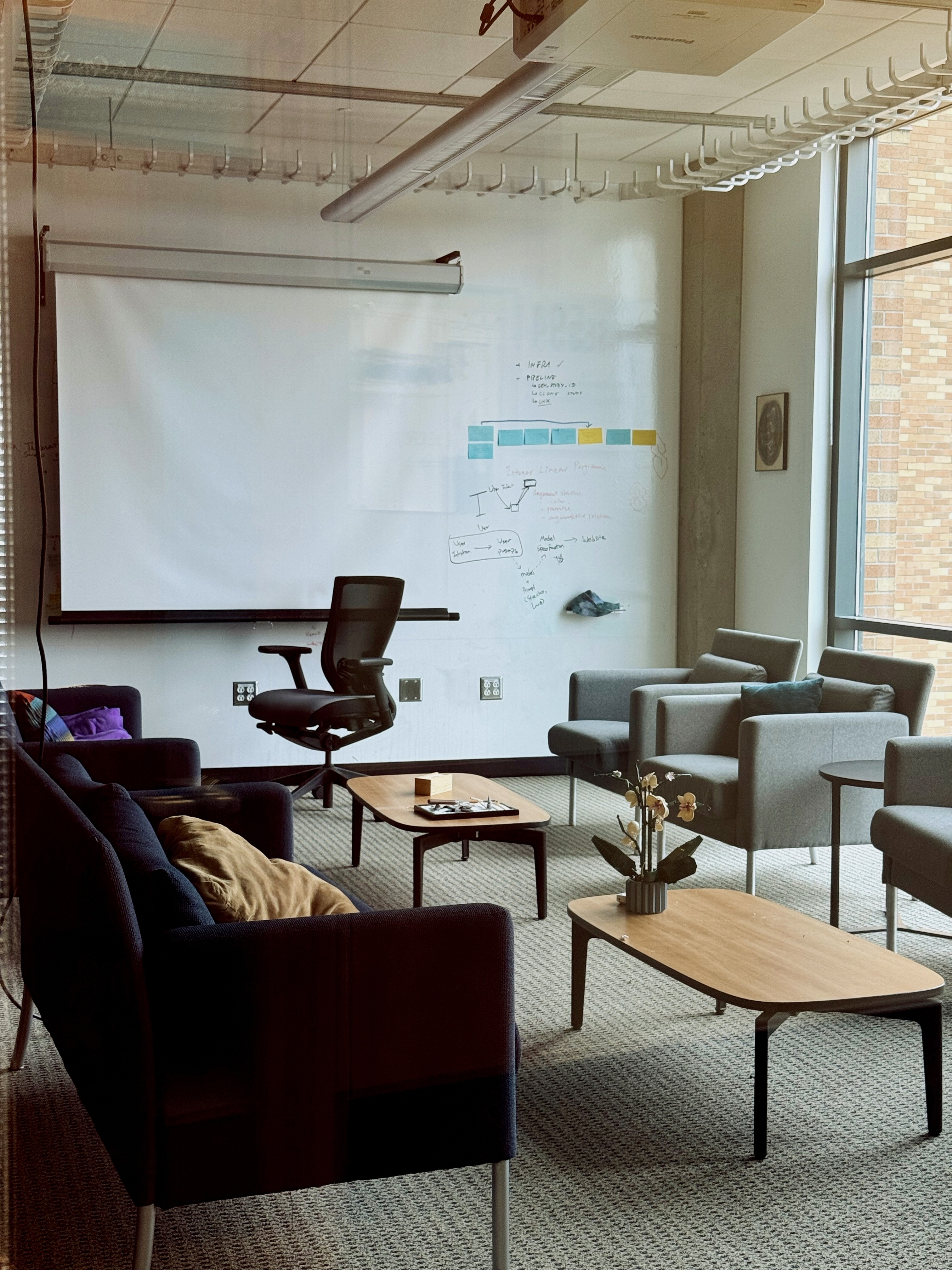
Our meeting room
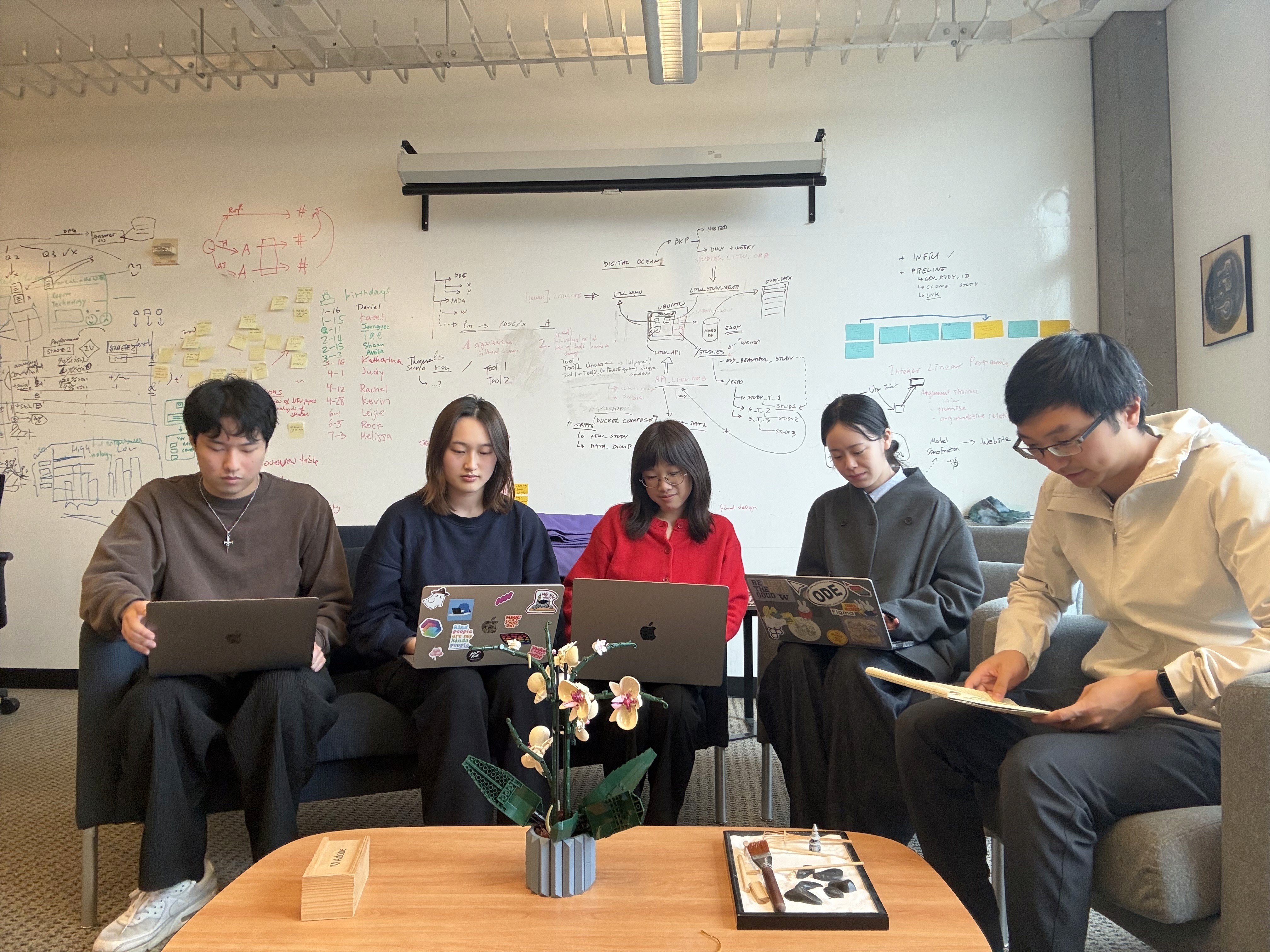
The research group!
The research group!
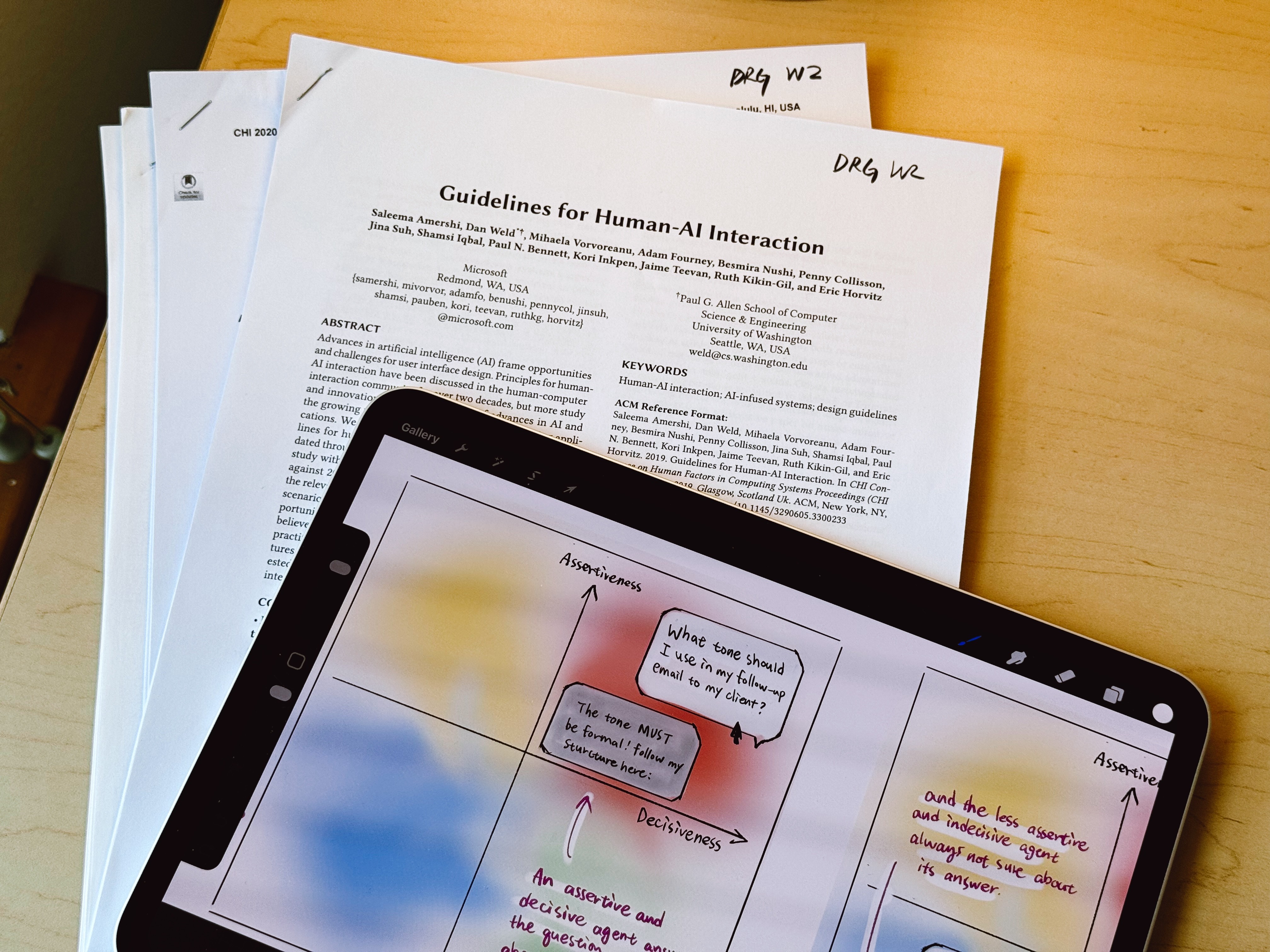
Literature Review & Sketch
Context
Background
Moodplan emerged from a ten-week Directed Research Group "Designing the Future of Human-Agent Interaction" at the University of Washington.
Moodplan emerged from a ten-week Directed Research Group "Designing the Future of Human-Agent Interaction" at the University of Washington.
Working alongside Ph.D. student Kevin Feng and Professor David McDonald, I explored designs that move beyond todays' Human-Agent interaction patterns.
Working alongside Ph.D. student Kevin Feng and Professor David McDonald, I explored designs that move beyond todays' Human-Agent interaction patterns.
By leveraging Speculative Design methods, this projects aimed to question the status quo and envision a future paradigm, where AI agents go beyond automation tools into collaborative partners.
By leveraging Speculative Design methods, this projects aimed to question the status quo and envision a future paradigm, where AI agents go beyond automation tools into collaborative partners.
Challenges
Users have limited ways to communicate with AI agents during the planning stage.
While current agents can communicate with users through natural language, there are gaps remain in the information flow between users and agents.
While current agents can communicate with users through natural language, there are gaps remain in the information flow between users and agents.
I noticed a difficulty for users to convey their preference and provide input during the planning stage. When users want to tweak a plan, they have to describe it in words, which hinders users' ability to collaborate.
I noticed a difficulty for users to convey their preference and provide input during the planning stage. When users want to tweak a plan, they have to describe it in words, which hinders users' ability to collaborate.

Gemini Deep Research only allows users to edit the plan through chat.
Users are confined to AI model's single, "perfect" viewpoint.
Today’s AI models are trained to be agreeable and safe — what Cai et al. called the "sycophantic paradigm."
Today’s AI models are trained to be agreeable and safe — what Cai et al. called the "sycophantic paradigm."
Instead of presenting diverse perspectives, AI provides just one "perfect" version. This prevents users from seeing different sides of a topic and making their own judgments.
Instead of presenting diverse perspectives, AI provides just one "perfect" version. This prevents users from seeing different sides of a topic and making their own judgments.
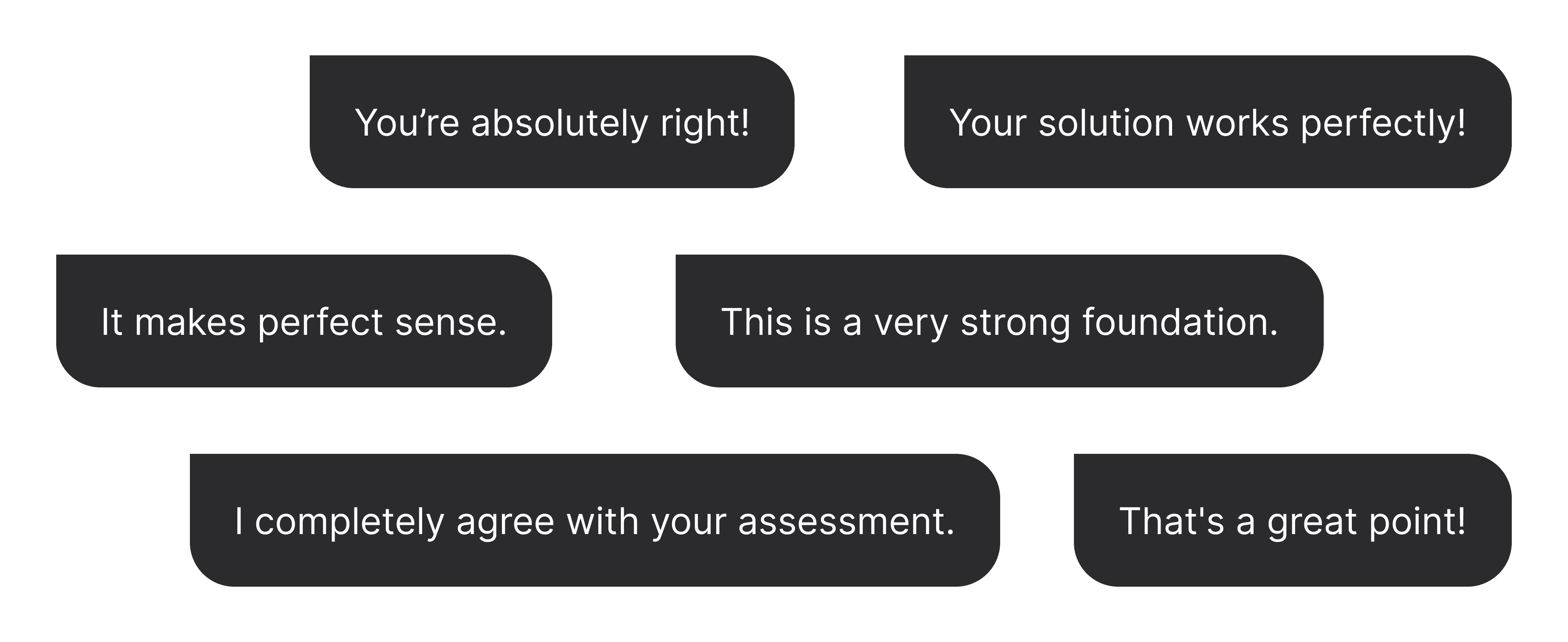
A visualization of the "sycophantic paradigm,"
How might we
Transform AI agents into collaborative partners that surface diverse perspectives to inspire creative decisions?
Transform AI agents into collaborative partners that surface diverse perspectives to inspire creative decisions?
Final Design
Ideation
Agent generates diverse outputs through the lens of Big Five Personality Traits.
Agent generates diverse outputs through the lens of Big Five Personality Traits.

Co-creation
Users curate a custom plan by mixing steps from different perspectives.
Users curate a custom plan by mixing steps from different perspectives.

Smooth Plan
Agent resolves logistical conflicts and refines step order into a cohesive plan.
Agent resolves logistical conflicts and refines step order into a cohesive plan.

Execution
Agent turns the co-created plan into action.
Agent turns the co-created plan into action.

Design Process
Week 1-4
Week 1-4
Literature Review
Week 5-6
Week 5-6
Ideation & Concept Development
Week 7-8
Week 7-8
Low-Fidelity Prototype
Week 9-10
Week 9-10
High-Fidelity Prototype &
Video Demo
Week 1 - 4
Week 1 - 4
Literature Review
In the first month, we built a foundation in Human-Agent interaction, exploring everything from the basics of AI agent design to current design challenges.
In the first month, we built a foundation in Human-Agent interaction, exploring everything from the basics of AI agent design to current design challenges.
Each week, we held a discussion session to share insights and raise open questions that eventually shaped our design direction.
Each week, we held a discussion session to share insights and raise open questions that eventually shaped our design direction.
Week 5
Week 5
Brainstorm with Speculative Design Method
First, I organized our research questions into four key themes with high-level "How Might We" question. This gave me a clear overview of opportunities to design.
First, I organized our research questions into four key themes with high-level "How Might We" question. This gave me a clear overview of opportunities to design.
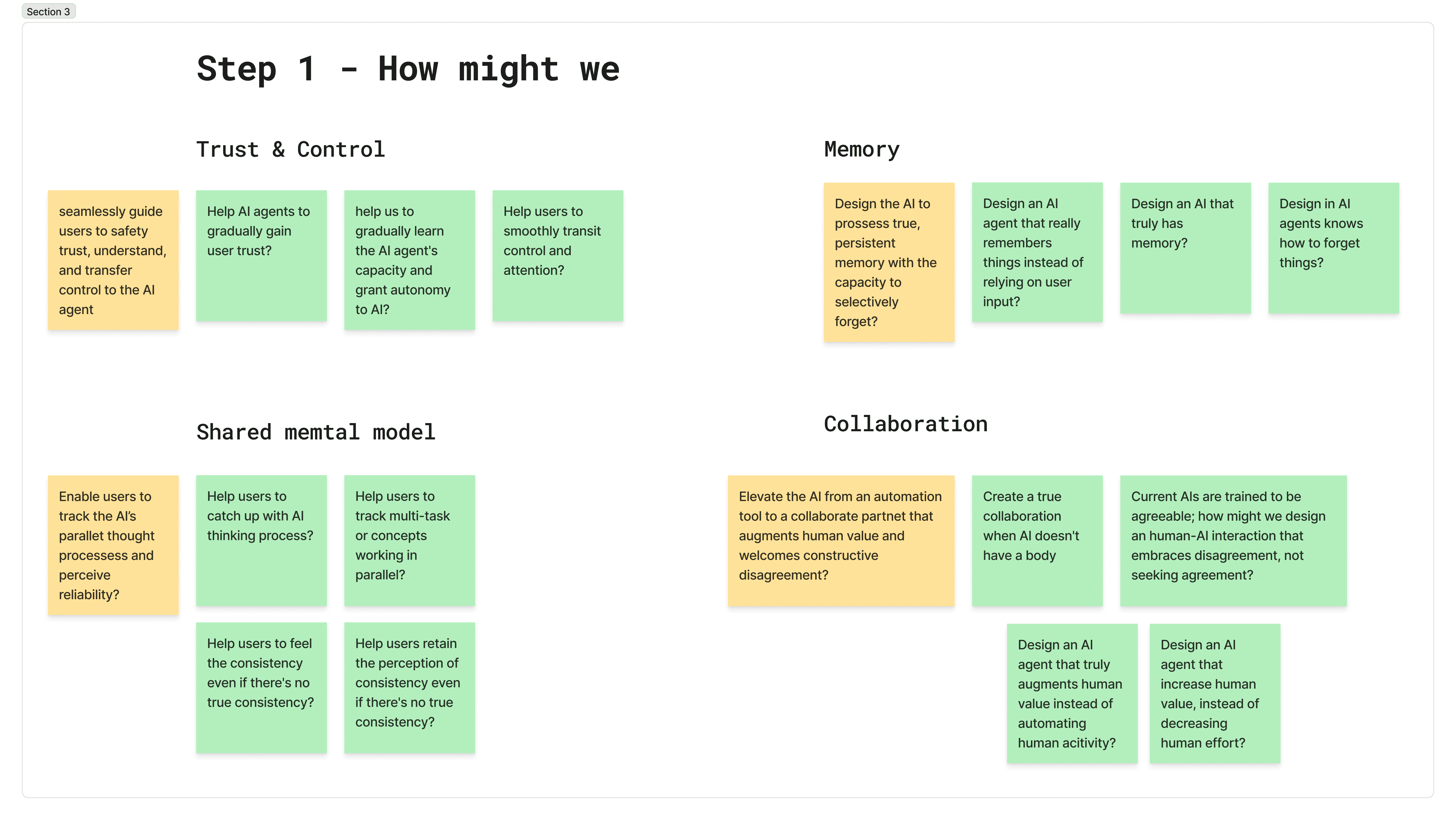
Synthesized questions into four key themes.
To expand my creativity, I used a Speculative Design method called Reductio Ad Absurdum. I listed current AI patterns and inverted them to their extremes.
To expand my creativity, I used a Speculative Design method called Reductio Ad Absurdum. I listed current AI patterns and inverted them to their extremes.
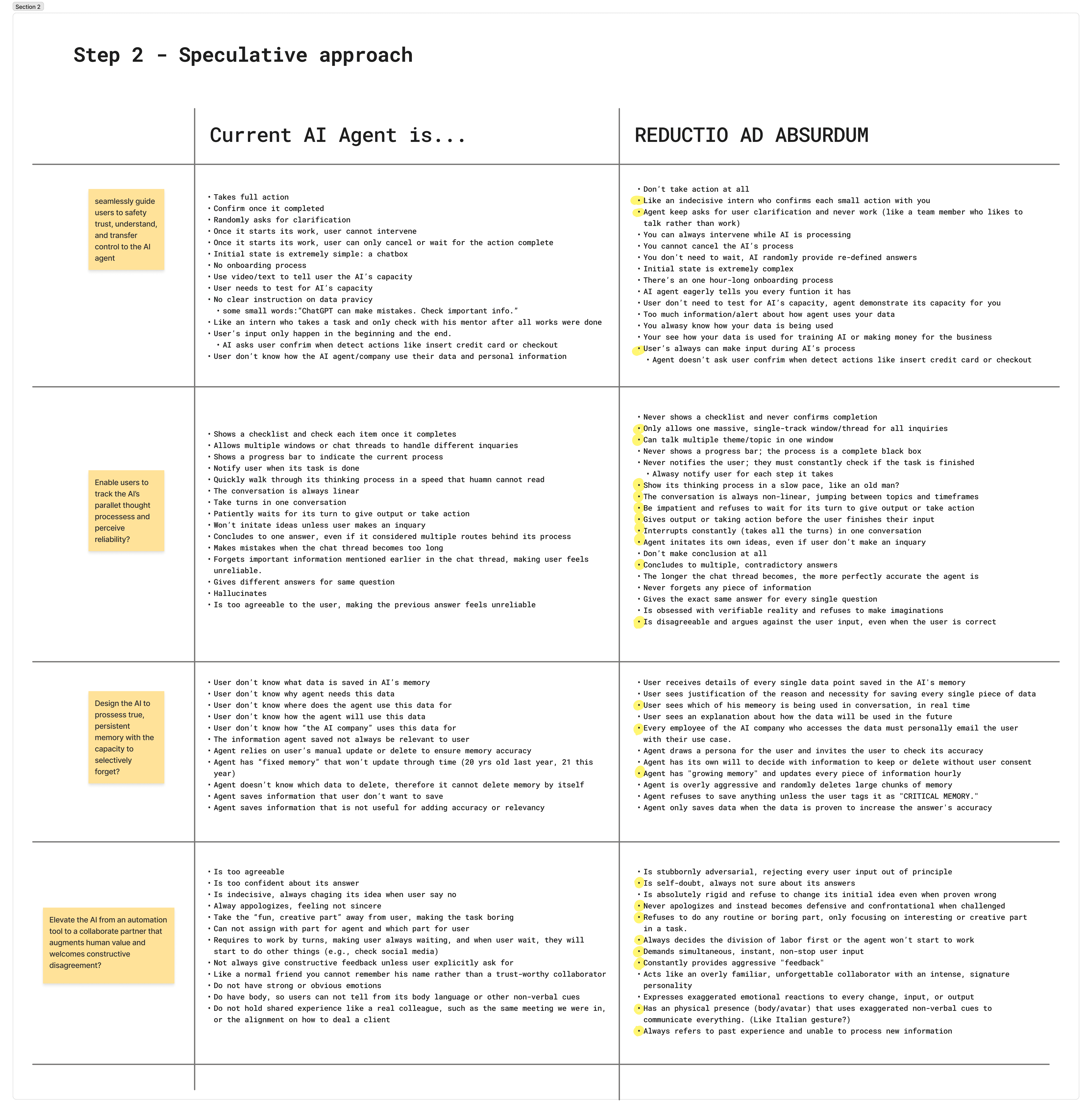
Standard AI behaviors vs. their extreme inversions.
This exercise sparked a question to me: What if an AI stopped being agreeable? Could an agent with distinct, even extreme perspectives actually bring more value to users? Driven by this curiosity, I started to sketch my concepts.
This exercise sparked a question to me: What if an AI stopped being agreeable? Could an agent with distinct, even extreme perspectives actually bring more value to users? Driven by this curiosity, I started to sketch my concepts.
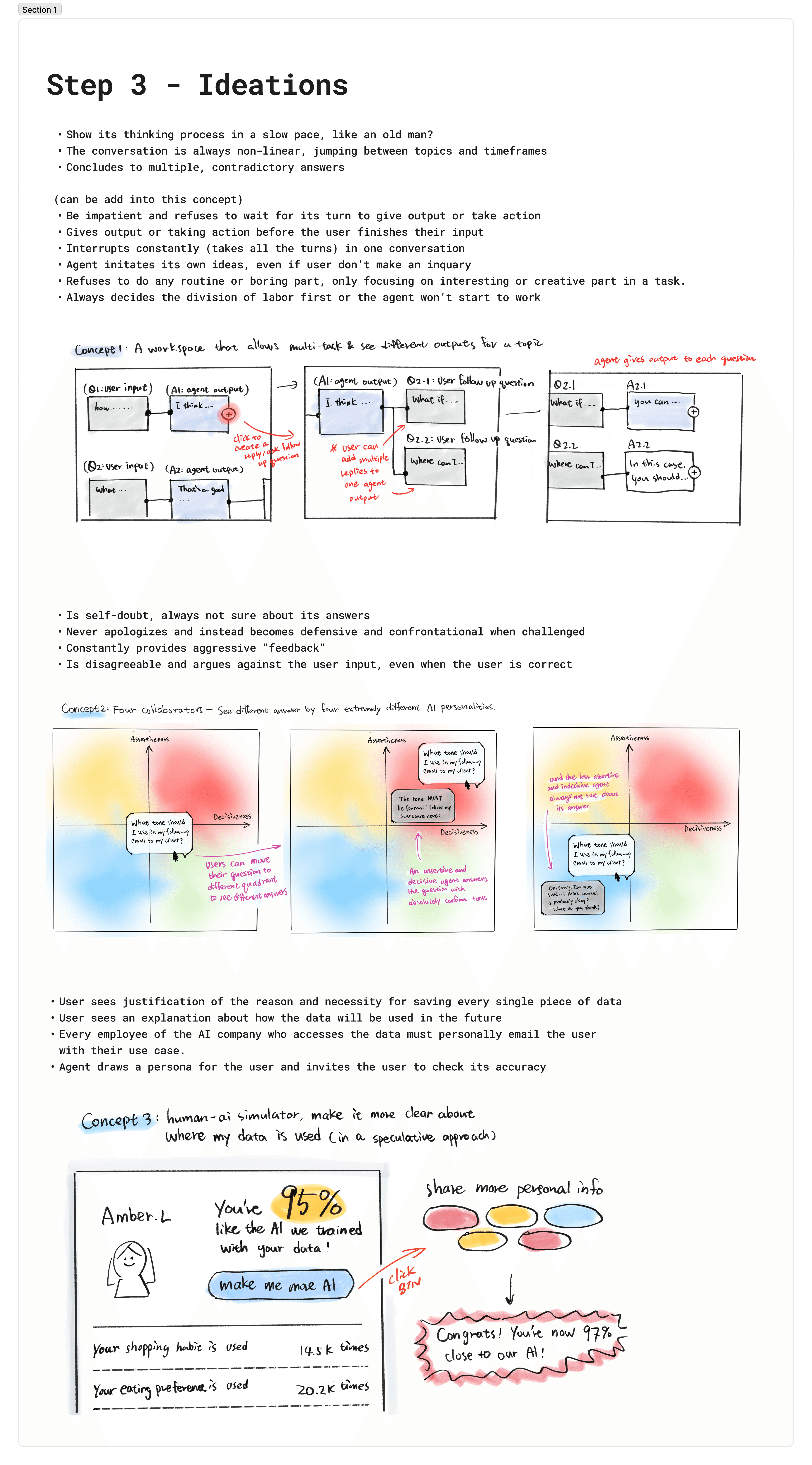
Translate abstract ideas into sketches.
Week 6
Week 6
Concept Development
I moved forward with the "Four Collaborator" concept, where users can drag prompts to see extreme responses from different perspectives.
I moved forward with the "Four Collaborator" concept, where users can drag prompts to see extreme responses from different perspectives.
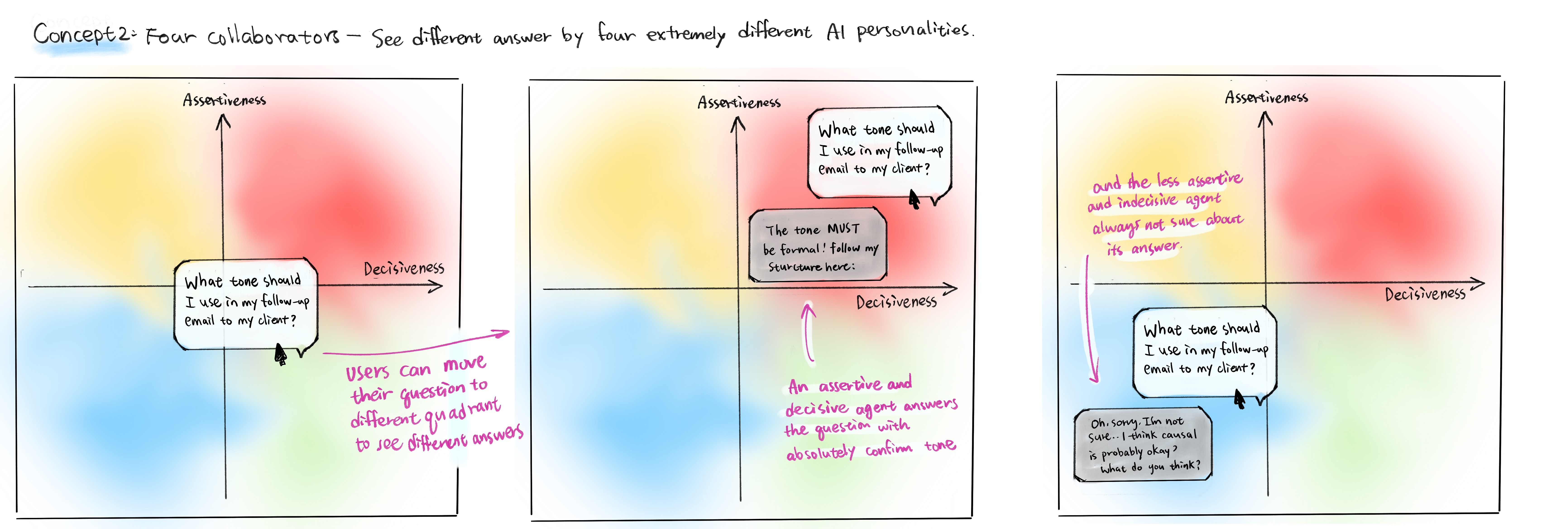
Demonstrating the interactions of the "Four Collaborators" concept.

Evaluating interactions with low-fidelity prototype made in Figma
Experimenting with prototype helped me identify a crucial limitation: Human personalities don't just exist on two sides of a spectrum. Additionally, my advisors encouraged me to think deeper: Don't just build another LLM tool; build an agent with agency.
Experimenting with prototype helped me identify a crucial limitation: Human personalities don't just exist on two sides of a spectrum. Additionally, my advisors encouraged me to think deeper: Don't just build another LLM tool; build an agent with agency.
So, I decided to iterate on the design. I removed the quadrants but kept its core value: facilitating human-agent collaborattion with multiple perspectives.
So, I decided to iterate on the design. I removed the quadrants but kept its core value: facilitating human-agent collaborattion with multiple perspectives.
Week 7 - 8
Week 7 - 8
Prototyping & Iteration with AI (Gemini)
To build a prototype that truly leverages AI's dynamic outputs, I used Gemini's Canvas tool to quickly build and iterate on three versions of the design.
To build a prototype that truly leverages AI's dynamic outputs, I used Gemini's Canvas tool to quickly build and iterate on three versions of the design.
The first iteration was an AI agent that generates plans based on different personality traits. However, I was not satisfied that users could only select an entire plan from a single personality.
The first iteration was an AI agent that generates plans based on different personality traits. However, I was not satisfied that users could only select an entire plan from a single personality.

🔗 1st Iteration Live Demo
The second iteration refined the granularity of planning, breaking the basic unit from a whole plan to a single step. This allowed users to select and blend suggestions from different personalities and build customized plans.
The second iteration refined the granularity of planning, breaking the basic unit from a whole plan to a single step. This allowed users to select and blend suggestions from different personalities and build customized plans.

🔗 2nd Iteration Live Demo
For the third iteration, I redesigned the layout that allowed users to see contrasting viewpoints side-by-side. I also added a "Smooth Plan" agent to help users refine their final selection into a cohesive plan.
For the third iteration, I redesigned the layout that allowed users to see contrasting viewpoints side-by-side. I also added a "Smooth Plan" agent to help users refine their final selection into a cohesive plan.

🔗 3rd Iteration Live Demo
Week 9 -10
Week 9 -10
Visual Design, High-Fidelity Prototype & Demo
After completing user flows and interactions with Gemini, I switched back to Figma to craft details and refresh the aesthetic language.
After completing user flows and interactions with Gemini, I switched back to Figma to craft details and refresh the aesthetic language.
To elevate the concept depth, I replaced the initial personality traits with the Big Five Personality Traits, giving the design a psychological foundation.
To elevate the concept depth, I replaced the initial personality traits with the Big Five Personality Traits, giving the design a psychological foundation.

The personality traits defined by the Big Five Personality Traits.
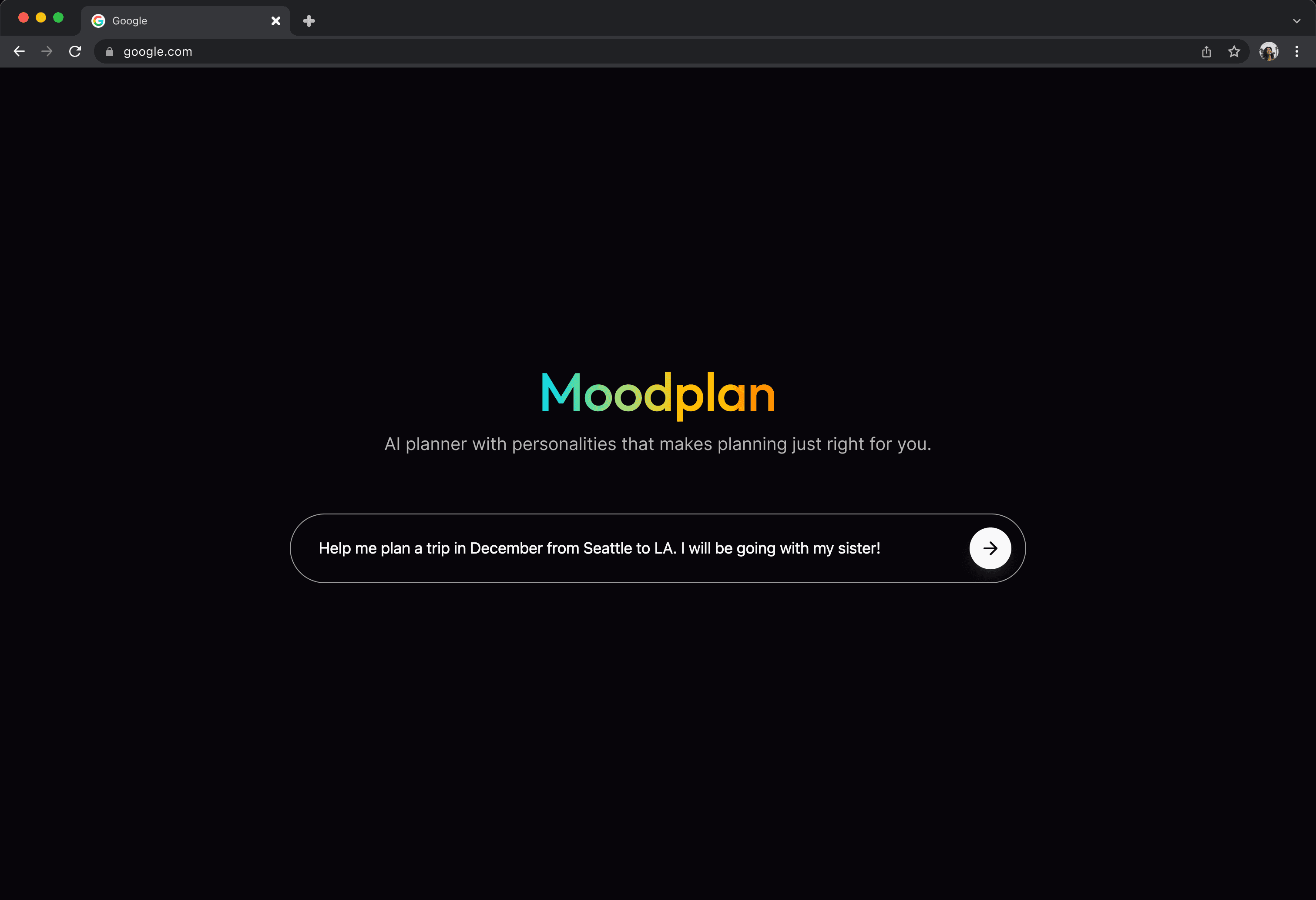
Landing page of Moodplan.
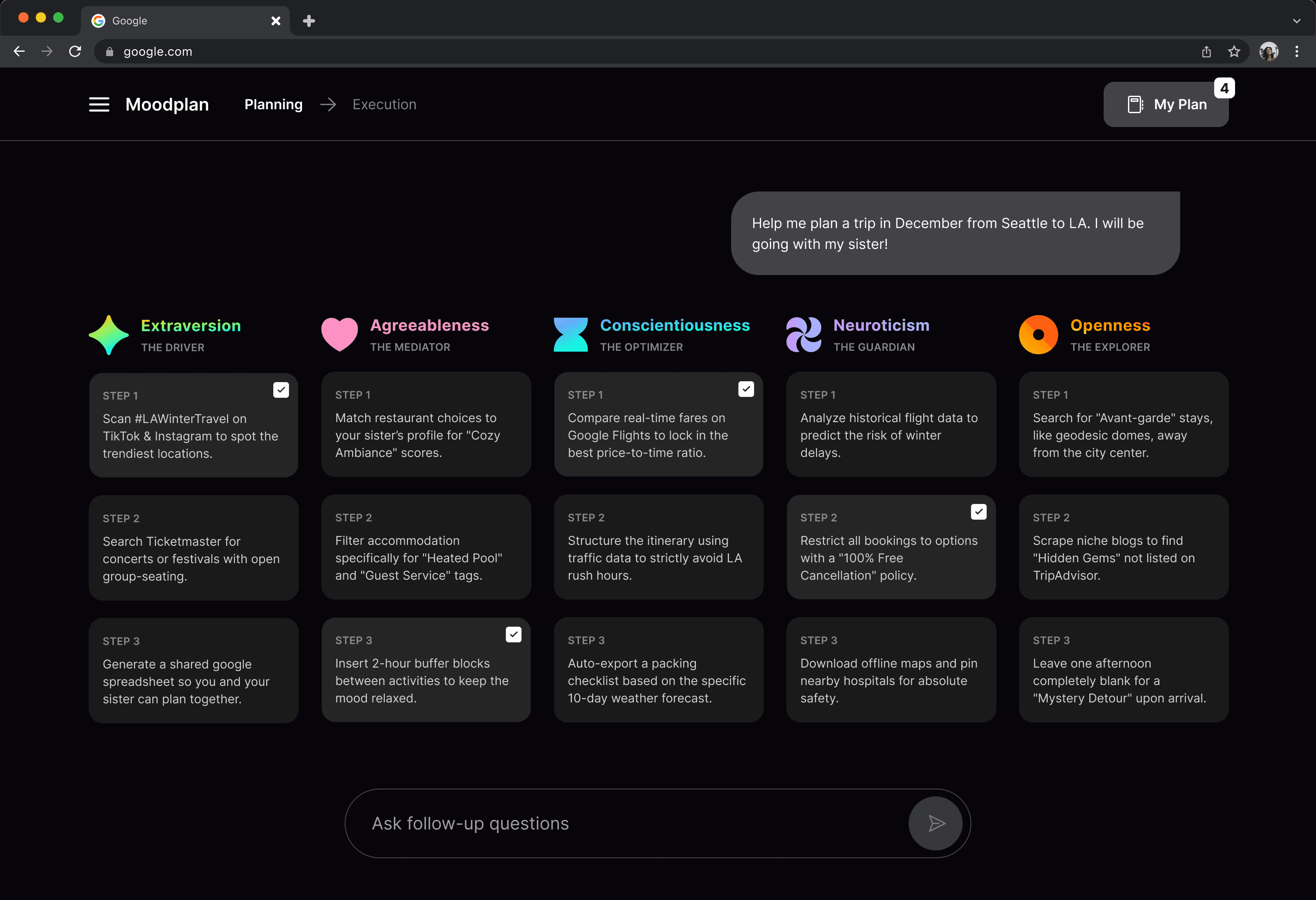
Defining unique colors and shapes for each personality traits.
Lastly, I created a video in Canva to demonstrate the complete design concept.
Lastly, I created a video in Canva to demonstrate the complete design concept.
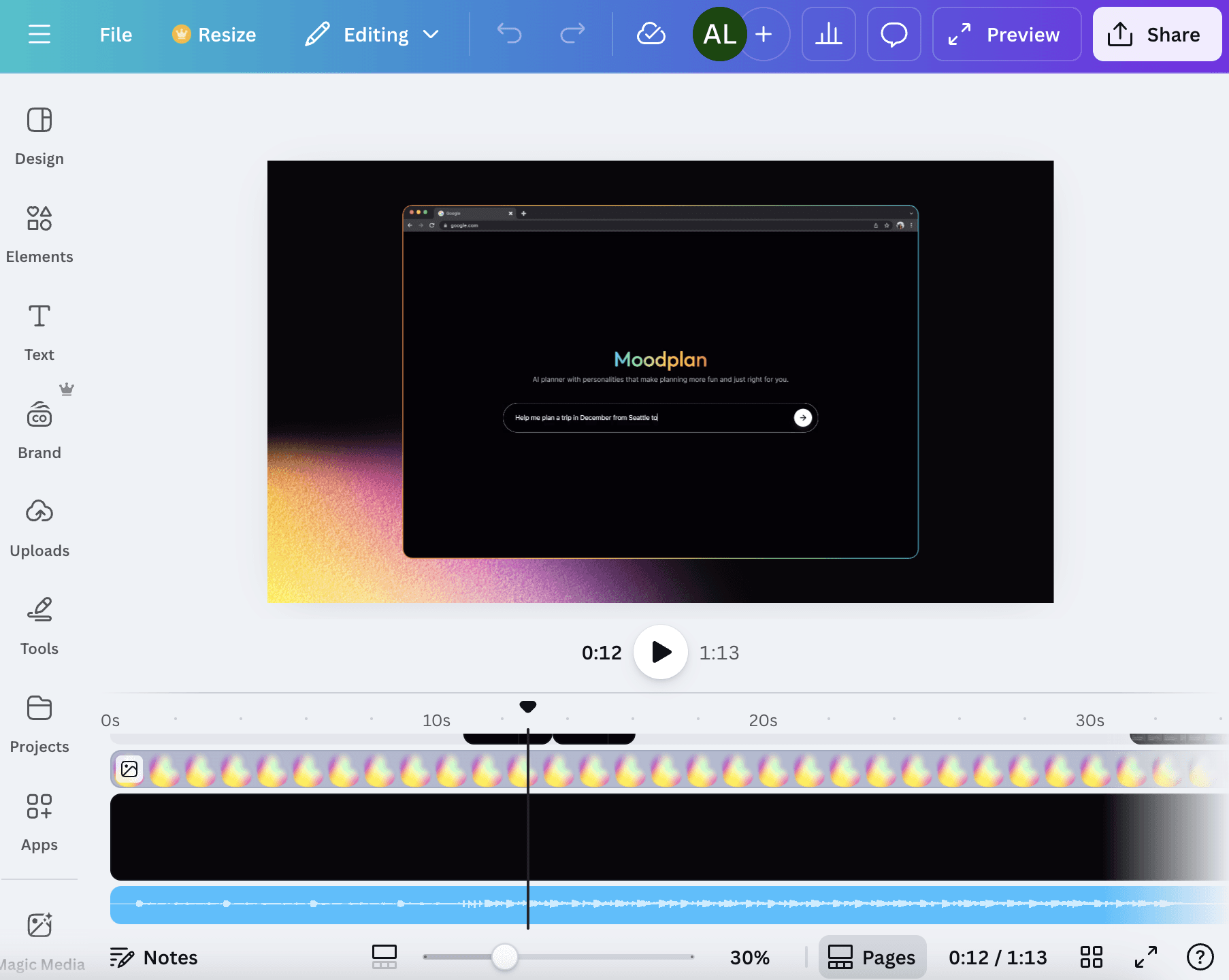
Creating a video demo with Canva.
Special Thanks
Ph.D. student Kevin Feng,
Prof. David McDonald,
Gloria, Jane, and Sam!
